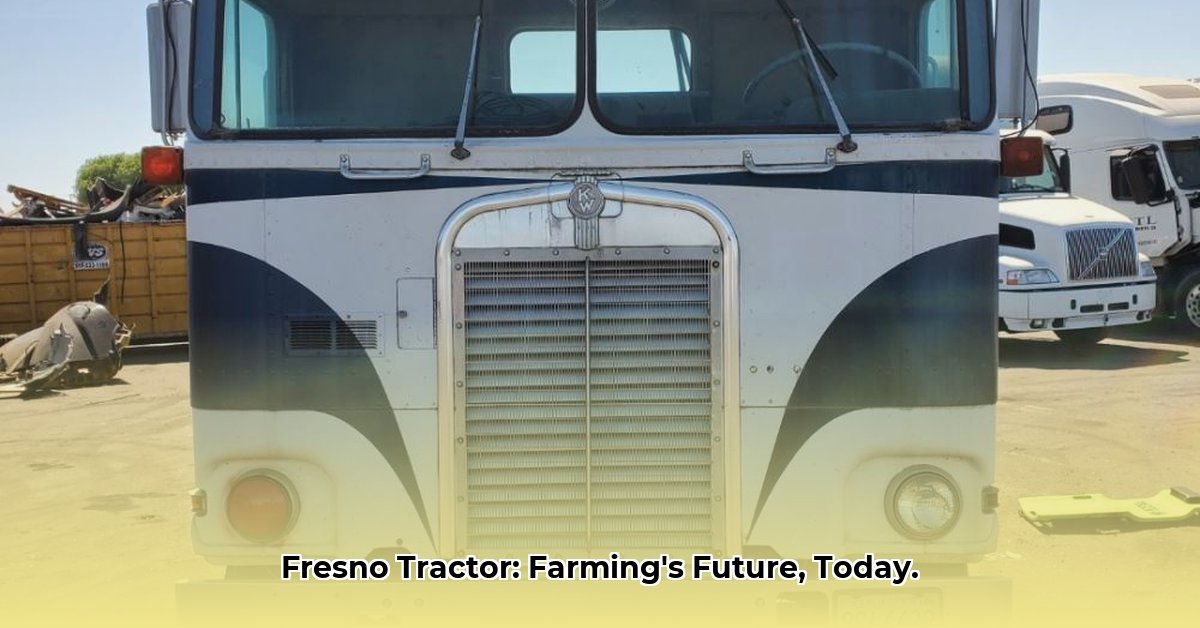
Fresno Tractor Inc. (FTI) holds a significant position within Central California's agricultural landscape, providing essential equipment and services to farmers. However, the extent of its contribution to sustainable farming practices remains unclear due to a lack of publicly available data. This article analyzes FTI's role, highlighting the need for greater transparency and outlining a path towards more sustainable operations.
FTI's Current Role in California Agriculture
FTI serves as a key player in the agricultural supply chain, offering equipment sales, rentals, and repair services. Their skilled mechanics ensure minimal downtime for farms, a crucial factor in maintaining productivity. However, quantifying FTI's direct contribution to sustainable agriculture is challenging without comprehensive data on its equipment offerings and operational impacts. What percentage of FTI's services involve sustainable farming technologies, such as precision farming tools or water-efficient irrigation systems? This vital information is currently unavailable.
The Urgent Need for Transparency: Data-Driven Insights
To accurately assess FTI’s environmental impact, both positive and negative, a commitment to transparency is paramount. This requires FTI to collect and openly share data on key sustainability indicators. Fuel savings from equipment serviced, greenhouse gas emission reductions, and waste management practices are crucial data points that currently remain obscured. This data will allow for a more complete and accurate analysis of FTI's ecological footprint.
“The lack of readily available data on FTI’s sustainability efforts makes it difficult to assess their true impact,” states Dr. Amelia Hernandez, Professor of Agricultural Economics at the University of California, Davis. “Transparent reporting will be essential for building trust and understanding.”
A Roadmap for FTI's Sustainability Journey: Actionable Steps
FTI possesses the potential to become a leader in sustainable agriculture. Achieving this requires a multi-pronged approach:
Comprehensive Sustainability Audit: An independent assessment should comprehensively evaluate FTI's current environmental impact, identify areas needing improvement, and highlight opportunities for integrating eco-friendly practices. This audit should utilize established sustainability frameworks and industry best practices.
Prioritization of Eco-Friendly Equipment: FTI should actively promote and prioritize the servicing of equipment designed for water conservation, reduced pesticide use, and improved soil health. This could include incentives for farmers to upgrade to more sustainable options and specialized training workshops. Such initiatives would demonstrate a strong commitment to environmental stewardship.
Targeted Technician Training: Investment in training programs for technicians is crucial. Equipping FTI's workforce with expertise in sustainable farming technologies ensures efficient servicing and maintenance of eco-friendly equipment, enhancing operational efficiency and demonstrating a commitment to long-term sustainability.
Strategic Collaborations and Innovation: FTI should collaborate with agricultural researchers, universities, and other industry leaders. This collaborative approach fosters continuous learning and adaptation, leading to innovative solutions and ensuring that FTI remains at the forefront of sustainability best practices.
The Broader Ecosystem: Farmers, Policymakers, and Environmental Responsibility
The transition to sustainable agriculture necessitates a collaborative effort. Farmers require access to appropriate equipment and knowledge, while government agencies can provide crucial support and incentives. Environmental organizations play a vital role in providing guidance and advocating for change. FTI is uniquely positioned to play a central role in this collaborative ecosystem.
Fresno Tractor Inc.’s Future: Embracing Sustainable Success
Sustainable practices are increasingly vital for the future of farming. FTI has the opportunity to lead this evolution. By embracing transparency, investing in its workforce, and wholeheartedly implementing sustainable practices, FTI can strengthen its market position and contribute significantly to a healthier environment.
Actionable Steps: A Collaborative Framework
The following table outlines short-term and long-term actions for various stakeholders to facilitate the adoption of sustainable agricultural practices in Central California:
| Stakeholder Group | Short-Term Actions | Long-Term Actions |
|---|---|---|
| Farmers | Research sustainable equipment options; assess FTI's services. | Invest in sustainable equipment; actively collaborate with FTI for upgrades and maintenance. |
| Fresno Tractor Inc. | Conduct a comprehensive sustainability audit; enhance data collection. | Develop a detailed sustainability plan; provide ongoing employee training; forge strategic industry partnerships. |
| Government Agencies | Offer financial incentives for adopting sustainable technologies. | Create policies that promote sustainable equipment adoption; invest in research and development. |
| Environmental NGOs | Partner with FTI and other stakeholders; assess environmental impacts. | Advocate for sustainable agriculture; support FTI's sustainability initiatives; provide expert guidance. |
The information presented reflects the current understanding, and further research may lead to a refined perspective on sustainable practices within the agricultural sector. Future studies should collect both quantitative and qualitative data to gain a clearer and more accurate understanding of FTI's impact.